
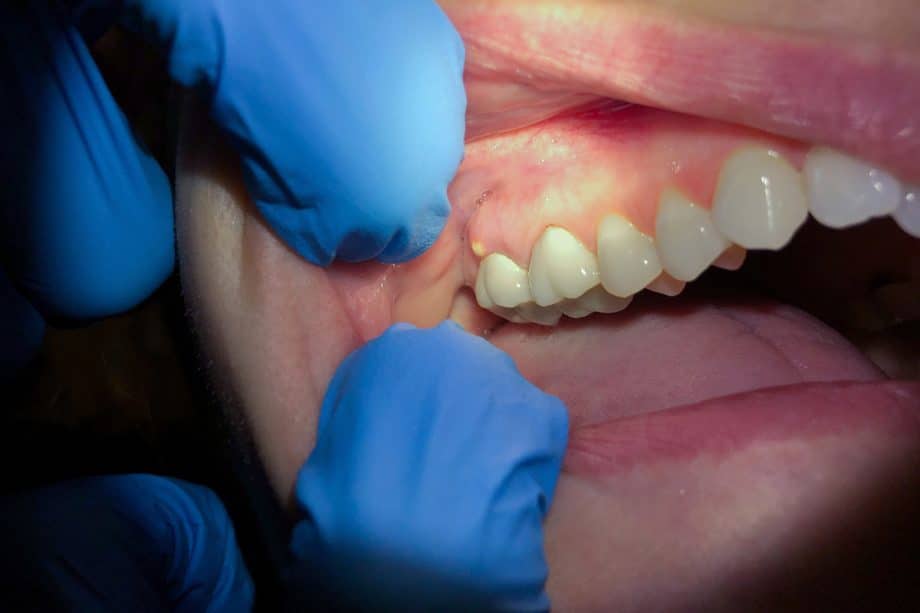
A dental abscess is a pocket of pus caused by a bacterial infection. It can be quite painful and only worsens without treatment. The earlier you seek professional care the sooner you will get relief, and in some cases preserve your natural tooth.
How do you know that you have an abscess? In this article we will cover the warning signs that often indicate that you have an abscess and not just a mouth sore, and when to seek emergency treatment.
What Is a Dental Abscess?
An abscess is a sign of infection, either in a tooth or in the gums. A periapical abscess occurs due to an infected tooth and will typically form at the tip of the tooth root. If the source of the infection is gum disease, a periodontal abscess will more likely appear in the gums beside the root. Common causes include untreated cavities, cracked or chipped teeth, failed dental work, and advanced gum disease.
7 Dental Abscess Warning Signs to Watch For
- Severe, Persistent, or Throbbing Toothache. Pain that pulses, lingers, or keeps you up at night. It may radiate to the jaw, ear, or neck.
- Sensitivity to Hot, Cold, or Pressure. Lingering sensitivity after eating or drinking or pain when biting down or chewing.
- Swelling in the Face, Jaw, or Gums. Puffiness in the cheek or jawline, or a tender, swollen area of gum.
- A Pimple-Like Bump on the Gums. The fistula (gum boil) signals infection seeking a way to drain.
- Bad Taste or Persistent Bad Breath. Salty, foul, or metallic taste from draining pus; bad breath that brushing doesn't fix.
- Fever and Feeling Unwell. Fever, fatigue, or general malaise as signs the infection is affecting the body.
- Swollen Lymph Nodes. Tender, swollen glands under the jaw or in the neck.
When a Dental Abscess Becomes an Emergency
Symptoms such as difficulty breathing or swallowing, rapidly spreading facial swelling, high fever, confusion, or swelling near the eye are serious enough to warrant a trip to the emergency room. Without treatment the infection could spread beyond your mouth and begin to affect other parts of your body.
For a painful abscess that isn’t life threatening, we provide emergency dentistry services and after-hours contact for patients (817-281-4801).
Why the Pain Stopping Doesn't Mean the Problem Is Gone
A common misconception is that pain relief equals an end to the infection. Unfortunately that is often the opposite of the truth. The infection can progress to the point where the nerve has died, meaning you can no longer feel pain associated with that tooth. The abscess may have ruptured, providing temporary relief of pressure, but the infection still remains. Seek professional treatment even if you experience symptom reduction.
How Dentists Treat a Dental Abscess
The first step is diagnosis through an oral exam and digital X-rays. This determines if it is an abscess, and if so, what the source is.
The next step is to drain the abscess and treat the tooth (if appropriate) with a root canal. In cases where the tooth can’t be saved it may need to be extracted. In some cases antibiotics will be prescribed to manage the infection and prevent spread. Sedation options are available when appropriate.
If one or more teeth need to be extracted they can be replaced with dental implants, bridges, or dentures.
Steps to Help Prevent a Dental Abscess
Not all abscesses can be prevented, but you can reduce your risk with the following tips:
- Brush twice daily and floss daily.
- Keep up with routine cleanings and exams.
- Treat cavities, cracks, and gum disease early.
- Limit sugary foods and drinks.
- Wear a mouthguard for sports.
These steps can minimize your risk of infection that could lead to the development of an abscess.
Listen to Your Smile: Small Signals Can Prevent Big Problems
Symptoms like pain, swelling, gum bumps, and bad taste are your body's warning signals that there is a problem. We recommend seeking emergency treatment right away rather than waiting it out. Early treatment leads to better outcomes. Contact us today to schedule a consultation.
Frequently Asked Questions About Dental Abscesses
Can a dental abscess go away on its own?
No. Symptoms may fade if the abscess drains, but the infection stays until a dentist treats the source.
How quickly does a tooth abscess need treatment?
As soon as possible, ideally within a day or two of symptoms. Facial swelling, fever, or trouble breathing or swallowing need immediate care.
Will I need a root canal for an abscessed tooth?
Often, yes. A root canal removes the infection while saving the natural tooth, though extraction may be needed if the tooth is too damaged.
Are antibiotics enough to cure a dental abscess?
Antibiotics can help control the infection, but they don't remove its source, so dental treatment is still needed.
What can I do for abscess pain before my appointment?
Rinse with warm salt water, use over-the-counter pain relievers as directed, and avoid very hot or cold foods. Don't attempt to pop or drain the abscess yourself.
Renan Williams, DDS, has provided compassionate family dentistry in North Richland Hills, TX, for three decades, offering everything from routine care and sedation dentistry to emergency treatment and dental implants. If you're noticing any signs of a dental abscess, contact us today to schedule an appointment and protect your healthy teeth and gums for life.